WhatsApp Automation Tool: What It Does and How to Choose One
A practical guide to what a WhatsApp automation tool does, the use cases that matter, what to look for, and the per-contact pricing trap that quietly inflates your bill.

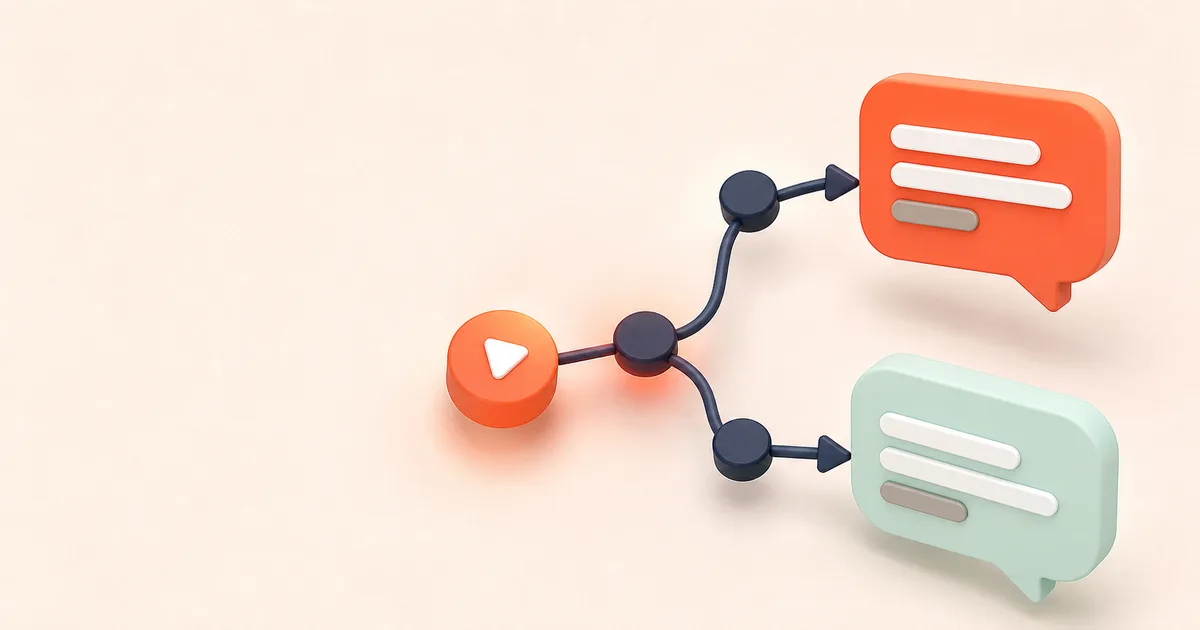
A WhatsApp automation tool lets you send broadcasts, run drip campaigns, and reply to customers automatically instead of typing every message by hand. It turns WhatsApp from a manual inbox into a channel you can scale, the same way email tools did two decades ago.
WhatsApp sits on phones your customers already check dozens of times a day, which is exactly why open and reply rates beat most other channels. The catch is that doing it manually does not scale past a handful of conversations. That is the gap a WhatsApp automation tool fills.
What a WhatsApp automation tool actually does
Underneath the marketing language, most tools cluster around a few core jobs:
- Broadcasts. Send one message to a segmented list at once, then track who opened, clicked, and replied. This is the closest WhatsApp equivalent to an email blast.
- Drip campaigns. Schedule a sequence of messages over hours or days. A new lead might get a welcome message, then a case study two days later, then an offer on day five, each one sent automatically.
- Chatbot auto-reply. Catch inbound messages and respond instantly. Simple versions match keywords; AI-powered ones read intent and answer in natural language, handing off to a human only when needed.
- Triggered follow-ups. Fire a message when something happens, such as an abandoned cart, a form submission, or a tag being added to a contact.
The better tools wrap all of this in a visual automation builder, so you connect a trigger to a condition to an action without writing code. FlowMaticX, for example, runs broadcasts, drip sequences, AI auto-reply chatbots, and triggered follow-ups from one visual builder rather than four disconnected screens.
Use cases that actually pay off
WhatsApp marketing automation earns its keep in three areas.
Outreach. Once a lead opts in, a WhatsApp automation tool can greet them, qualify them with a few questions, and book a call, all before a salesperson touches the conversation. Paired with verified lead data, you reach people who actually exist instead of bouncing off dead numbers.
Support. A chatbot auto-reply handles the repetitive questions, such as order status, hours, pricing, and returns, around the clock. Customers get an instant answer, and your team only sees the messages that genuinely need a human. The result is faster response times without hiring a night shift.
Re-engagement. Most revenue hides in people who already know you. Drip campaigns and triggered follow-ups quietly bring them back, whether that is a cart-abandonment nudge, a renewal reminder, or a check-in with a customer who has gone quiet. Because these messages run automatically, the cost of staying in touch drops close to zero.
What to look for in a WhatsApp automation tool
Features blur together on a comparison page, so weigh the things that change your day-to-day experience.
- A real visual builder. You should be able to map a flow, branch on conditions, and add delays without a developer. If the builder is clunky, you will avoid building automations at all.
- Genuine AI auto-reply, not just keyword matching. Keyword bots break the moment a customer phrases a question unexpectedly. An AI chatbot that understands intent handles real conversations and knows when to escalate.
- Reliable sending. Deliverability depends on the underlying infrastructure. Tools built on a stable sending service keep your broadcasts landing instead of stalling mid-campaign.
- Segmentation and tagging. Blasting your whole list is how you get muted. Look for tags, segments, and conditions so each message goes to the right people.
- Honest reporting. Delivered, read, clicked, and replied, at minimum. You cannot improve a drip campaign you cannot measure.
If WhatsApp is one of several channels you run, an all-in-one platform saves you from stitching tools together. FlowMaticX bundles WhatsApp automation with verified lead scraping, cold email, web chatbots, and SEO with rank tracking, so outreach, nurture, and conversion live in one place. Agencies can run it white-label and resell it under their own brand.
The per-contact pricing trap
Here is the part the feature pages skip. Many WhatsApp automation tools charge per contact. Plans are commonly tiered by audience size, where a typical tier covers up to 1,000 contacts and you jump to the next price band the moment you cross it. That sounds reasonable until your list grows, which is the entire point of doing marketing.
The problem is that your bill scales with list size whether or not those contacts are active. A subscriber who opted in a year ago and never opens a message still counts against your cap. As your list compounds, so does the cost, and you end up pruning healthy contacts just to stay in a pricing tier. That is backwards.
There is also a separate cost layer worth understanding. The official WhatsApp Cloud API charges per conversation through Meta, with a rolling 24-hour window per contact. That is a Meta fee, not a tool fee, and it applies regardless of which platform you use. So per-contact tool pricing stacks on top of per-conversation messaging costs, and the two together can get expensive fast.
The alternative is a tool with no per-contact fees, where pricing is tied to capability rather than the size of your audience. That is the model FlowMaticX runs on. You grow your list without watching a meter, which means automation stays cheap exactly when it should be paying off most. Read any pricing page carefully and ask the direct question: does my bill go up purely because I added contacts? If the answer is yes, factor that into the lifetime cost, not just the headline monthly price.
Putting it together
A WhatsApp automation tool is worth adopting when manual messaging starts capping your growth, which usually happens sooner than teams expect. Start with one clear use case, such as a welcome drip or an abandoned-cart follow-up, prove it works, then expand. Choose a tool with a real visual builder, genuine AI auto-reply, reliable sending, and pricing that does not punish you for growing your list. Get those four right and WhatsApp becomes one of the highest-leverage channels you run.
About the author
Founder & CEO, FlowMaticX
Founder & CEO of FlowMaticX. Built it after paying $400/month across Apollo, Instantly, ManyChat, and Ahrefs while still working in 4 tabs. Based in Pakistan, building for the markets US-built tools ignore.